
Protect Senior Dogs: Screen Every 6–12 Months With a Vet Formulated Plan

Immune aging in dogs, known clinically as immunosenescence, is the gradual decline in immune cell function paired with inflammaging, a low-grade chronic inflammation that builds with age. The single most useful thing you can do about it is schedule diagnostic screening (CBC, chemistry with SDMA, urinalysis) every 6 to 12 months, starting when your dog enters their senior years. Diet, hydration, and supplements support the process. None of them treat or prevent disease.
TL;DR:
- Regular veterinary screening is essential, with CBC, chemistry panels with SDMA, and urinalysis recommended every 6 to 12 months starting in the senior years.
- Signs like dull coat, slower recovery, and behavioral changes can indicate immune decline and warrant earlier vet visits.
- Maintaining a lean weight, feeding a senior-appropriate diet, and ensuring consistent exercise support the immune system’s reserve capacity.
- Supplements like omega-3s and vitamin E support immune signaling but cannot diagnose, treat, or prevent disease, and require vet guidance before use.
- Breed, size, and environment influence immune aging pace, with larger breeds aging earlier and chronic stress or pollutants exacerbating decline.
Table of Contents
- How Aging Changes a Dog’s Immune System
- Warning Signs and the AAHA Senior Screening Schedule
- Daily Habits That Support Immune Health
- Supplements: What They Can and Cannot Claim
- Where a Vet-Formulated Chew Fits in a Senior Plan
- Stress, Environment, and Immune Aging
- Breed-Specific Patterns in Immune Aging
- Emerging Research in Canine Immune Rejuvenation
- Chronic Disease and Immune Decline: A Two-Way Street
- How to Safely Introduce New Supplements or Diet Changes
- Start the Proactive Plan With Petgev
- Sources
- FAQ
How Aging Changes a Dog’s Immune System
Your dog’s immune system does not fail overnight. It erodes, and the erosion has two names worth knowing.
Immunosenescence is the decline in immune cell numbers and function. Inflammaging is the flip side: a persistent, low-grade inflammatory state that keeps the body in a mild alert mode even when nothing is actively wrong. Researchers tie inflammaging to elevated levels of IL-6 and TNF-α, signaling molecules that, at chronically high levels, contribute to a range of age-related diseases rather than resolving them.
The blood work backs this up. Studies on aged and geriatric dogs show measurable drops in total lymphocyte counts, along with shifts in T-cell subsets, specifically declining CD4 and CD8 cell counts and a falling CD4/CD8 ratio. That ratio matters because it reflects the balance between helper and cytotoxic T-cells, a balance your dog’s body relies on to mount a coordinated response to infection and vaccination. A skewed ratio doesn’t mean your dog is sick. It means the immune system has less reserve capacity than it did at three years old.
Here’s the catch for owners: a standard CBC can flag a drop in total lymphocytes, but it cannot break that number down into T-cell and B-cell subsets. That requires flow cytometry, a specialized lab technique your regular vet clinic likely doesn’t run in-house. So the practical reality is that routine screening catches broad trends, not fine-grained immune profiling.
Canine immunology research is still catching up to human geroscience in terms of sample size and longitudinal data. That gap doesn’t make the signal meaningless. It’s exactly why consistent monitoring, rather than a single snapshot test, is the more reliable way to track how your dog’s immune status is trending over time.

Warning Signs and the AAHA Senior Screening Schedule
Immune aging shows up in ways you can spot at home before it shows up on a lab report. Watch for a dulling coat, slower recovery after exercise, reduced appetite, new patchiness in mobility, or a dog who seems mentally “foggier” than they used to be. None of these confirm immune decline on their own, but together they’re a signal to move up your next vet visit.
The AAHA Senior Care Guidelines recommend a specific diagnostic cadence for senior dogs, and it’s worth writing down before your next appointment:
- CBC (complete blood count): every 6 to 12 months, to track lymphocyte and red blood cell trends.
- Chemistry panel including SDMA: every 6 to 12 months, to catch early kidney function changes that can compound immune stress.
- Urinalysis: paired with the chemistry panel, same interval.
- Tick-borne disease and heartworm testing: annually, since older dogs handle vector-borne infections less efficiently.
A single low lymphocyte count usually isn’t cause for alarm. A downward trend across three or four consecutive panels, combined with weight loss or muscle wasting your vet notes using a Muscle Condition Score, is what prompts a deeper workup, sometimes including the specialty testing mentioned above.
Daily Habits That Support Immune Health
You can’t reverse immune aging, but you can reduce the daily load your dog’s immune system carries. That’s the whole game: less chronic burden, more reserve capacity.
- Feed a complete, senior-appropriate diet. Match calories to activity level, not to the bag’s suggested serving, and track body condition score monthly rather than relying on the eye test.
- Prioritize protein quality over quantity. Older dogs often need more protein to maintain muscle, not less, contrary to older conventional wisdom about senior diets.
- Keep weight in the lean range. Excess fat tissue is metabolically active and produces its own inflammatory signals, which stacks directly on top of age-related inflammaging.
- Maintain daily movement. Two or three moderate walks beat one long weekend hike; consistency matters more than intensity for older joints and cardiovascular conditioning.
- Watch hydration closely. Dehydration impairs immune cell function and puts extra strain on organ systems already working harder with age.
- Be cautious with raw diets in multi-pet or immunocompromised households. An aging immune system handles pathogen exposure less efficiently, so the risk-benefit math shifts as your dog gets older.
Pro Tip: Weigh your dog’s food bowl empty and full for a week. Most owners underestimate how much a “eyeballed” scoop drifts from the actual recommended serving, and that drift adds up fast in a 12-year-old dog with a slower metabolism.
Dietary fat sources matter too. A controlled feeding trial in geriatric beagles found that adjusting the ratio of dietary vitamin E and omega-3 fatty acids measurably shifted CD8+ T-cell percentages and immune response markers. That’s a real, published mechanism, not marketing language. It’s also a reminder that nutrients modulate immune activity gradually, over weeks, not overnight.
Supplements: What They Can and Cannot Claim
Here’s something most pet owners don’t know: the FDA does not approve pet supplements the way it approves drugs. That means no supplement can legally claim to diagnose, treat, mitigate, cure, or prevent any disease, immune-related or otherwise. If a product’s marketing promises to “cure” arthritis or “reverse” immune decline, that’s a regulatory red flag, not a selling point.
What the evidence does support is more modest and, frankly, more believable. Omega-3 fatty acids, vitamin E, and select antioxidants act as adjunctive modulators, meaning they support immune signaling alongside good nutrition and veterinary care. They’re a complement to the system, not a replacement for it.
Before you buy anything, run it through this checklist:
- Full, transparent ingredient list with no proprietary blends hiding actual amounts.
- Dose disclosed per serving, not vague “as needed” language.
- Third-party testing results you can actually view or request.
- Manufacturing in a certified facility (GMP, SQF, or equivalent).
- Formulated with veterinary input, ideally from a board-certified specialist.
The FDA has issued warning letters to supplement brands making unproven disease claims, which is exactly why that checklist matters more than a flashy label.
Where a Vet-Formulated Chew Fits in a Senior Plan
There are veterinarian-formulated daily chews designed for senior dogs with multiple supportive ingredients, offered as an alternative to many individual supplements. The formula includes a blend of botanicals, oils, vitamins, and antioxidants aimed at supporting multiple body systems in dogs. Together they’re built to support seven systems at once: joints, brain, heart, liver, immunity, skin and coat, and energy, replacing the seven or more separate bottles many senior-dog owners end up juggling.
It is produced under quality-controlled conditions with third-party testing to ensure safety and consistency. Suggested dosing varies based on the dog’s size or weight. It’s a daily routine, not a cure, and it works best alongside the screening schedule covered above.
Stress, Environment, and Immune Aging
Immune decline isn’t purely a biological clock ticking down. Environment and stress load shape how fast that clock runs.
Chronic stress, whether from a disruptive move, a new pet in the household, prolonged isolation, or ongoing pain from undiagnosed joint issues, keeps cortisol elevated over time. Sustained cortisol elevation suppresses lymphocyte function and blunts the immune response your dog needs when actually exposed to a pathogen. It’s the same mechanism seen in chronically stressed humans, and there’s no reason to think dogs are exempt.
Environmental exposures compound the picture. Dogs living in households with secondhand smoke, frequent exposure to lawn chemicals, or poor air quality carry a higher baseline inflammatory load, on top of whatever inflammaging is already happening from age alone. Urban dogs with limited outdoor access and less exercise variety often show more stress-related behavioral signs than dogs with consistent routine and space to move.
The practical fix isn’t complicated: consistent daily schedules, dedicated decompression time away from household chaos, and minimizing unnecessary chemical exposure in the yard and home. None of that shows up on a lab panel, but it shapes the numbers that do.

If your senior dog seems more anxious, more reactive, or more withdrawn than they used to be, don’t write it off as “just getting old.” That behavioral shift can be a visible symptom of an immune system already working overtime.
Breed-Specific Patterns in Immune Aging
Not every breed ages immunologically at the same pace, and size is only part of the story.
Large and giant breeds, Great Danes, Mastiffs, Bernese Mountain Dogs, tend to show physiological aging earlier, often by age 6 or 7, compared to small breeds that don’t enter their senior years until 10 or later. That earlier onset applies to immune function too, which is one reason large-breed senior wellness exams often start younger than owners expect.
Certain breeds also carry known predispositions to autoimmune and immune-mediated conditions that interact directly with age-related decline. German Shepherds show elevated rates of certain immune-mediated conditions. Golden Retrievers and Boxers carry higher lifetime cancer risk, and cancer surveillance overlaps heavily with immune function monitoring since a weakened immune system struggles more to identify and clear abnormal cells. West Highland White Terriers and Cocker Spaniels are more prone to specific skin and allergic conditions that flare as immune regulation loosens with age.
None of this means a purebred senior dog is destined for trouble. It means the screening conversation with your vet should factor in breed history alongside age and current symptoms. A 7-year-old Bernese Mountain Dog and a 7-year-old Chihuahua are not at the same point in their immune aging curve, even though the calendar says otherwise.
Mixed-breed dogs generally show more genetic variability in immune resilience, though that’s a population-level trend, not a guarantee for any individual dog.
Emerging Research in Canine Immune Rejuvenation
Canine immunology is a smaller research field than human geroscience, but it’s catching up, and some of what’s coming is genuinely interesting.
Researchers are studying senolytic compounds, substances designed to clear senescent cells, the “zombie cells” that stop dividing but still pump out inflammatory signals that drive inflammaging. Early work in this space largely follows human aging research, with veterinary applications still in earlier stages of study.
Immune profiling technology is also maturing. Flow cytometry, once confined to specialty referral labs, is becoming more accessible for research settings, which means better data on T-cell and B-cell subset changes across breeds and ages is likely coming over the next several years. That data will eventually refine screening recommendations beyond the current CBC and chemistry panel standard.
Nutraceutical research continues to build on findings like the vitamin E and omega-3 feeding trial in geriatric beagles mentioned earlier, testing whether specific nutrient ratios can measurably shift immune cell populations in a beneficial direction. This is incremental work. It’s the kind of research that produces better-formulated supplements over time, not overnight breakthroughs.
Stem cell and regenerative approaches are being explored in veterinary medicine broadly, mostly for joint and orthopedic applications so far, with immune applications still largely experimental. If you see a product marketed as a proven “immune rejuvenation therapy,” treat that claim with real skepticism. Genuine breakthroughs in this space are rare and they get published in peer-reviewed journals before they show up in a supplement ad.
Chronic Disease and Immune Decline: A Two-Way Street
Immune aging doesn’t happen in isolation. It happens alongside, and often because of, the chronic conditions that accumulate in older dogs.
Kidney disease is a clear example. As kidney function declines, which SDMA testing helps catch early, the body accumulates metabolic waste that further stresses immune cells. That’s part of why the AAHA screening panel pairs chemistry with SDMA rather than relying on chemistry alone. Diabetes works similarly: poorly controlled blood glucose impairs white blood cell function directly, making diabetic senior dogs more vulnerable to infections that a younger, non-diabetic dog would clear without incident.
Arthritis and chronic pain create a subtler version of the same feedback loop. Persistent pain keeps cortisol elevated, and elevated cortisol suppresses lymphocyte activity, so a dog managing untreated joint pain is fighting a two-front battle even if nobody’s calling it an immune problem.
Cancer sits at the center of this interplay in both directions. Immune surveillance, the body’s ongoing process of identifying and destroying abnormal cells, weakens with age, which partly explains why cancer incidence climbs sharply in senior dogs. At the same time, cancer itself often further suppresses immune function, creating a compounding cycle that vets watch closely once a diagnosis is made.
This is exactly why the AAHA guidelines emphasize proactive monitoring over single-issue fixes. Treating a chronic condition in isolation, without factoring in its immune impact, misses half the picture.
How to Safely Introduce New Supplements or Diet Changes
Change one thing at a time. That’s the single rule that prevents most of the confusion owners run into when starting something new.
If you’re adding a supplement, introduce it at the full recommended dose or, for some products, a gradual ramp-up, and hold everything else in your dog’s routine steady for at least two weeks. That window lets you actually attribute any change, good or bad, to the new product instead of guessing among three variables at once.
Watch for soft stool, appetite changes, or unusual lethargy in the first several days. Most quality supplements cause no reaction at all, but mild GI adjustment in the first week isn’t unusual and typically resolves on its own. If symptoms persist past a week or worsen, stop and call your vet.
Diet transitions deserve the same patience. Mix a small portion of new food into the old over 7 to 10 days, increasing the new food’s share gradually rather than swapping bowls overnight. This matters more in senior dogs, whose digestive systems have less flexibility to absorb sudden changes without upset.
Always loop your vet in before starting anything new, especially if your dog is on existing medication. Some supplements and nutrients can interact with prescription drugs, and your vet is the only one with the full picture of your dog’s current chemistry panel and medication list.
Start the Proactive Plan With Petgev
Everything above points to one theme: immune aging responds better to steady, proactive habits than to reactive fixes after something goes wrong. That’s the whole idea behind Petgev’s approach. Instead of waiting for a diagnosis to start acting, Healthy Aging Chews give you a daily foundation, formulated with Dr. Michael Geist, DVM, DACVIM, built around 14 ingredients that support seven systems, including immunity, in one routine.
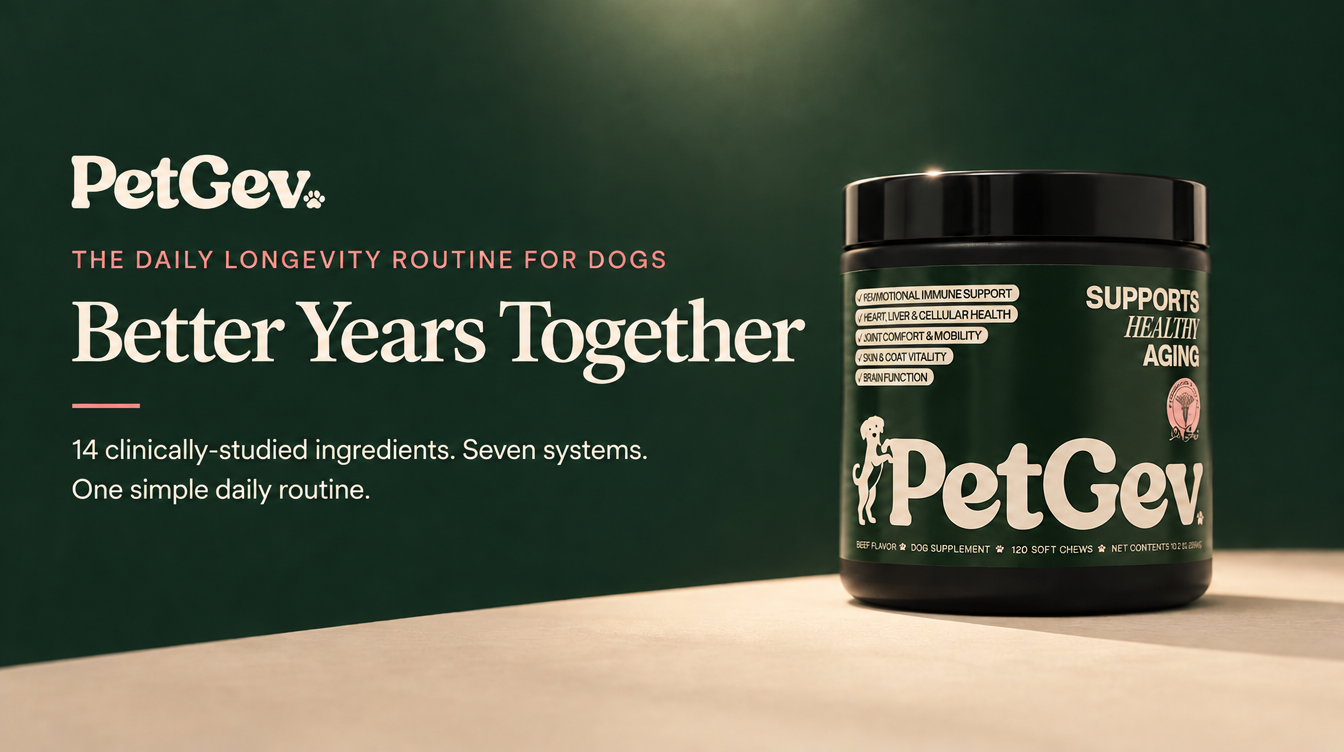
Dosing is simple: one to four soft chews daily based on your dog’s body weight, drawn from a 120-count jar that’s designed to replace the seven or more separate supplement bottles many owners currently juggle. It’s not a treatment and it’s not a substitute for the AAHA screening schedule covered earlier in this piece. Think of it as one consistent piece of a bigger plan that still includes regular vet visits, good nutrition, and weight management.
If you want the fuller picture of how Petgev frames long-term senior-dog care, the Dog Longevity Blueprint lays out the proactive philosophy behind the product line. But if you’re ready to start today, the Healthy Aging Chews product page has the full ingredient breakdown, dosing chart, and ordering options, priced at $53.99 for a one-time jar or $39.99 every 4 weeks through the Proactive Plan subscription.
Sources
For readers who want to go straight to the primary sources behind this guide:
- 2023 AAHA Senior Care Guidelines for Dogs and Cats
- FDA: Animal food labeling and pet food claims
- Review: inflammaging and immunosenescence (2025)
FAQ
What Is the Life Expectancy for Dogs With Autoimmune Disease?
Life expectancy varies widely by condition, severity, and how early it’s caught, so there’s no single number that applies across all autoimmune diagnoses. Dogs diagnosed early and managed under consistent veterinary care, including the regular screening intervals AAHA recommends, generally have better outcomes than those diagnosed late. Talk to your vet about the specific condition your dog has, since prognosis differs enormously between, say, autoimmune hemolytic anemia and a localized skin condition.
What Can I Give My Dog to Build Up Their Immune System?
Nutrition, hydration, weight management, and consistent exercise are the foundation, alongside regular veterinary screening to catch changes early. Some nutrients, including omega-3 fatty acids and vitamin E, have shown measurable effects on immune cell markers in controlled feeding studies, and vet-formulated products like Petgev’s Healthy Aging Chews are designed to support immune function as part of that broader routine. No supplement replaces veterinary care or guarantees disease prevention.
What Age Is Considered Very Old for a Dog?
It depends heavily on breed and size: small breeds are often considered senior around age 10 to 12, while giant breeds can enter their senior years as early as 6 or 7. Rather than fixating on a single age cutoff, AAHA guidelines recommend starting senior screening protocols based on your dog’s individual breed and health history rather than waiting for a specific birthday.
How Much Does Petgev Cost?
Healthy Aging Chews are $53.99 for a one-time jar of 120 soft chews, or $39.99 every 4 weeks through the Proactive Plan subscription. Both options include the full 14-ingredient formula dosed by your dog’s body weight.
Recommended
PetGev chews are a nutritional supplement for healthy dogs, not a medicine. They are not intended to diagnose, treat, cure, or prevent any disease. Results vary between dogs. Talk to your veterinarian before starting any supplement, especially if your dog is pregnant, nursing, taking medication, or under veterinary care. This article is general information, not veterinary advice.
